

Fleet, tickets with deadlines and invoicing in one system: the dispatcher sees the office, the technician sees the day's route on their phone.
Tickets with deadlinesFleet and routesInvoice from the work orderDemo available
The dispatcher sees the fleet on a map, the technician gets the day's route on their phone, and the signed work order becomes an invoice without anyone retyping it. Timesheets and payroll live in the same system.
The dispatcher sees every vehicle on a map; the technician gets the day's route on their phone, with the scheduled visits in order.
Every request has a deadline and an owner. The service history stays attached to the customer instead of scattered across messages and notes.
The work order the customer signed becomes an invoice straight from the system, without re-entering the data somewhere else.
Hours are tracked per employee and per day; worked hours and employer cost are calculated automatically, not in a separate spreadsheet.
Fleet, tickets with deadlines and invoicing in one system: the dispatcher sees the office, the technician sees the day's route on their phone.
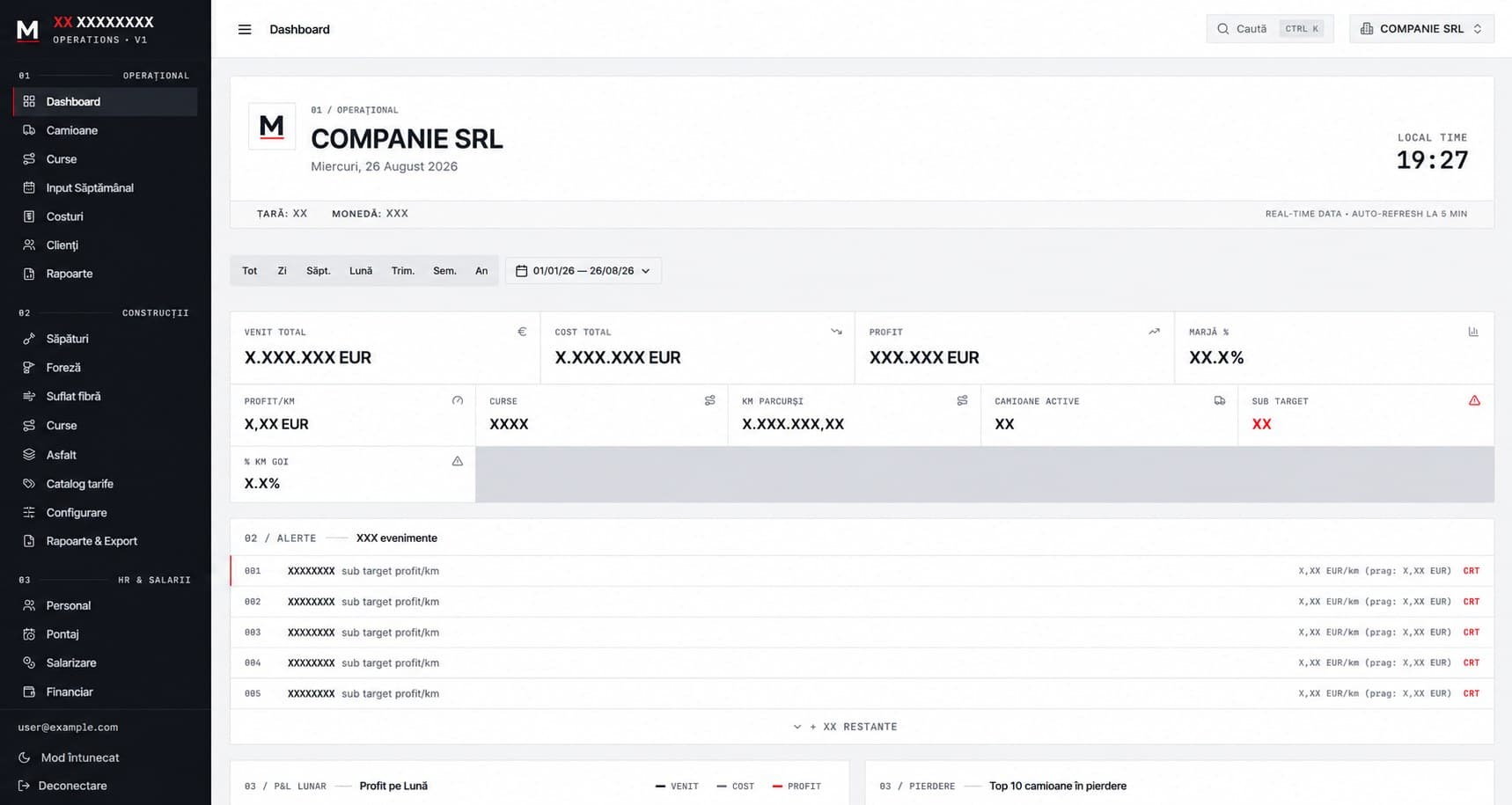
Trips, drivers and site work sheets, from which timesheets and payroll are calculated.
A day with the dispatcher and the field technician, not with the org chart. What comes out is the list of modules, ordered by how much each one hurts.
The first module — usually fleet or tickets — goes into production and gets used daily. The rest settles on top of it.
Backups, monitoring and hands-on fixes are part of the delivery; they are not a separate service sold to you later.
Fleet, tickets or timesheets — tell me which one is holding you up and I tell you how soon it can be in production.